
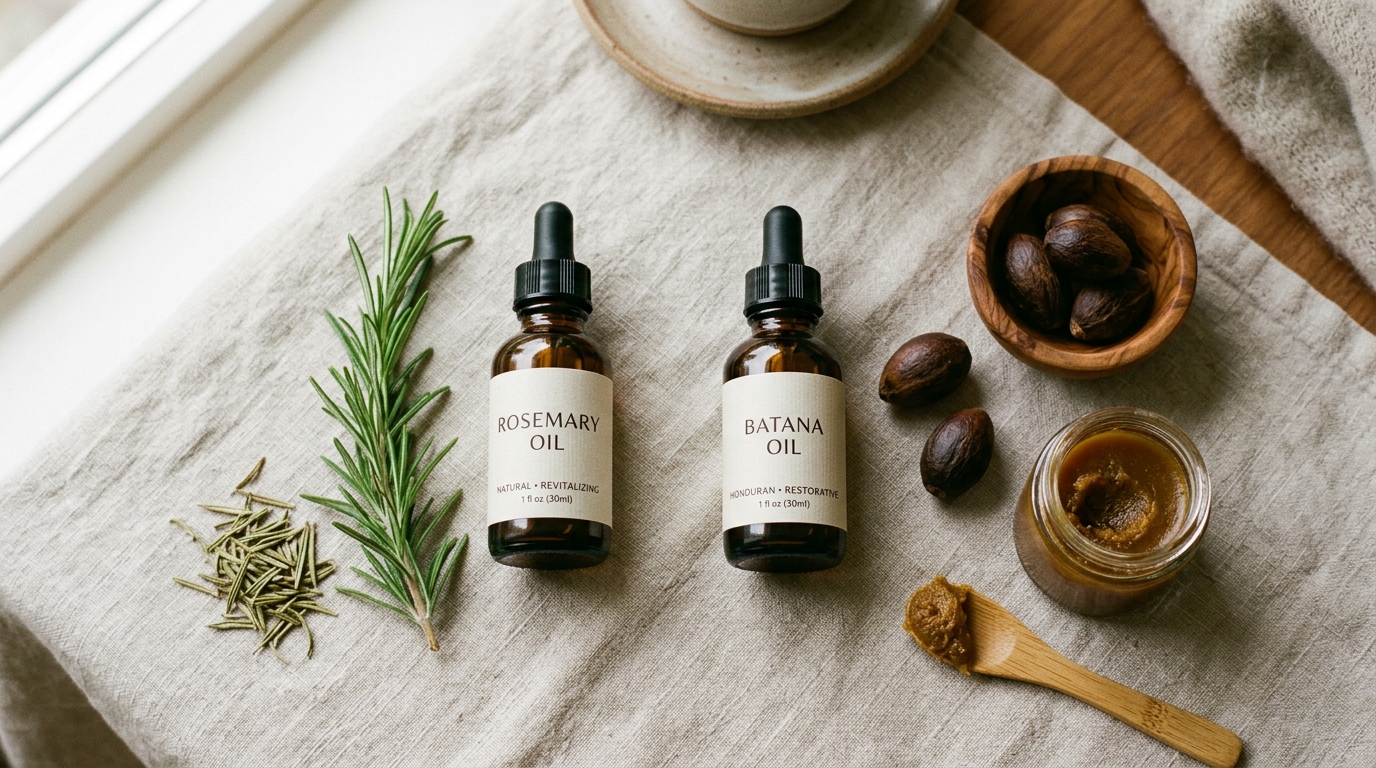
Scroll through TikTok for five minutes and you will see them everywhere — small amber bottles of rosemary oil and rich, chocolatey jars of batana oil. Both have racked up hundreds of millions of views, transformed countless before-and-after videos, and become the unofficial mascots of the scalp care revolution. But which one actually works? And more importantly, which one is right for your hair?
If you have been stuck between these two viral scalp oils, you are not alone. They both promise healthier, fuller, shinier hair — but they work in completely different ways. In this guide, we break down what each oil does, how they compare, and how to choose the one that will give you real results.
The TikTok Scalp Oil Boom Explained
Scalp care has officially become the hottest category in haircare. As consumers increasingly treat their scalp like an extension of their skin, natural oils have surged in popularity — and rosemary and batana oil are leading the charge. Both have ancient roots in traditional beauty rituals, but it is social media that has brought them mainstream attention.
The appeal is simple. Both oils are affordable, natural, multi-use, and free from synthetic ingredients. They tap into the larger “skincare-ification” of haircare, where ingredients and routines are taking center stage. If you want a deeper look at how this trend is reshaping your full routine, check out our guide on hair cycling and why it is transforming haircare in 2026.
What Is Rosemary Oil?
Rosemary oil is an essential oil extracted from the leaves and flowering tops of the Rosmarinus officinalis plant through steam distillation. It has been used for centuries in traditional medicine and is now one of the most studied natural ingredients for scalp and hair health.
Key Benefits of Rosemary Oil
Rosemary oil is best known for its ability to stimulate hair growth by improving blood circulation to the scalp. According to WebMD, research suggests rosemary oil may be as effective as minoxidil (the active ingredient in Rogaine) for treating pattern baldness, with fewer side effects.
Beyond growth, rosemary oil offers several scalp-supporting benefits:
Stimulates hair follicles by boosting circulation, which can encourage new growth and reduce shedding.
Fights scalp issues thanks to its antimicrobial and anti-inflammatory properties, making it useful for dandruff, itchiness, and irritation.
Strengthens strands with antioxidants like carnosic acid, which help protect hair from environmental damage.
Improves overall scalp health, creating a better environment for hair to grow strong from the root.
Who Should Use Rosemary Oil?
Rosemary oil is ideal for anyone dealing with thinning hair, excessive shedding, an oily or flaky scalp, or slow hair growth. It works especially well for those with normal to oily hair types because it is lightweight and does not weigh strands down. If you have curly or very dry hair, you can still use it — just pair it with a heavier oil for moisture.
What Is Batana Oil?
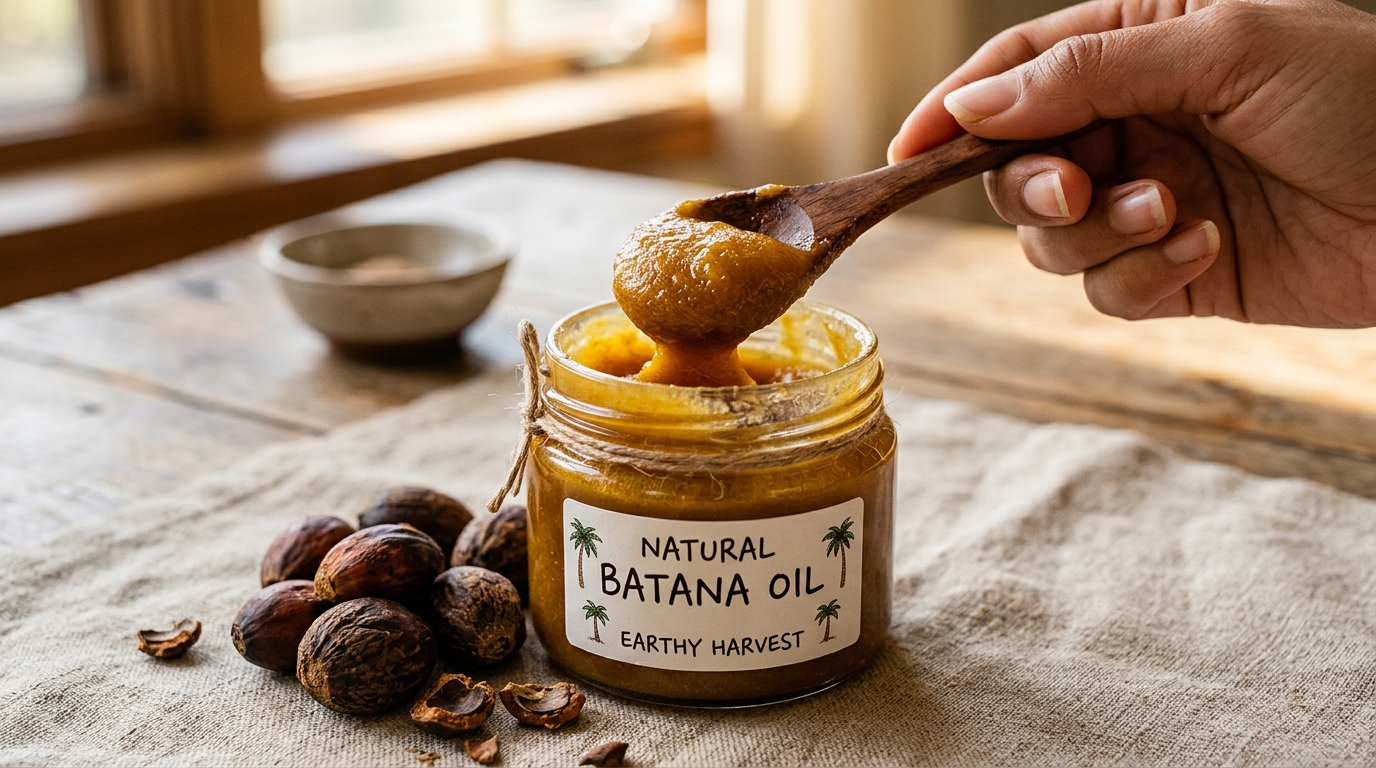
Batana oil is a rich, deeply nourishing oil extracted from the nuts of the American oil palm tree (Elaeis oleifera), traditionally used by the Miskito people of Honduras for hair and skin care. Unlike rosemary oil, which is a light essential oil, batana is thick, buttery, and packed with fatty acids.
Key Benefits of Batana Oil
Batana oil is celebrated for its ability to repair, nourish, and protect hair rather than stimulate growth directly. Its benefits include:
Deep hydration from natural fatty acids that penetrate the hair shaft and restore moisture.
Reduces breakage by strengthening hair fibers and improving elasticity.
Smooths the cuticle, leading to softer, shinier, more manageable hair.
Supports scalp health with antioxidants and vitamin E that protect against free-radical damage.
Repairs damage from heat styling, chemical processing, and color treatments.
Who Should Use Batana Oil?
Batana oil is the better choice for those with dry, damaged, brittle, curly, or color-treated hair. It is particularly popular in the curly hair and afro-textured hair communities because of how deeply it nourishes coily strands. If your main concern is breakage, dullness, or restoring hair after damage, batana is your match. For more on protecting color-treated hair, see our guide on how to maintain your hair color between salon visits.
Rosemary Oil vs. Batana Oil: The Key Differences
While both oils support scalp and hair health, they solve very different problems. Here is a clear breakdown:
Primary Purpose
Rosemary oil is a stimulator — its main job is to boost circulation and encourage growth. Batana oil is a nourisher — its main job is to hydrate, repair, and strengthen existing strands.
Texture and Feel
Rosemary oil is light, watery, and absorbs quickly into the scalp. Batana oil is thick, rich, and butter-like at room temperature, melting on contact with skin.
Best For
If you want to grow new hair, reduce shedding, or improve scalp health, rosemary oil is the winner. If you want to repair damage, restore moisture, or make your existing hair stronger and shinier, batana oil is the better pick.
How Quickly You See Results
Rosemary oil’s growth effects typically take 3 to 6 months of consistent use to become visible, since hair grows about half an inch per month. Batana oil’s hydration and shine benefits can be visible within just a few uses, with strength improvements appearing over several weeks.
How to Use Rosemary Oil and Batana Oil
How you use these oils matters just as much as which one you choose. Here is how to get the most out of each.
Using Rosemary Oil Correctly
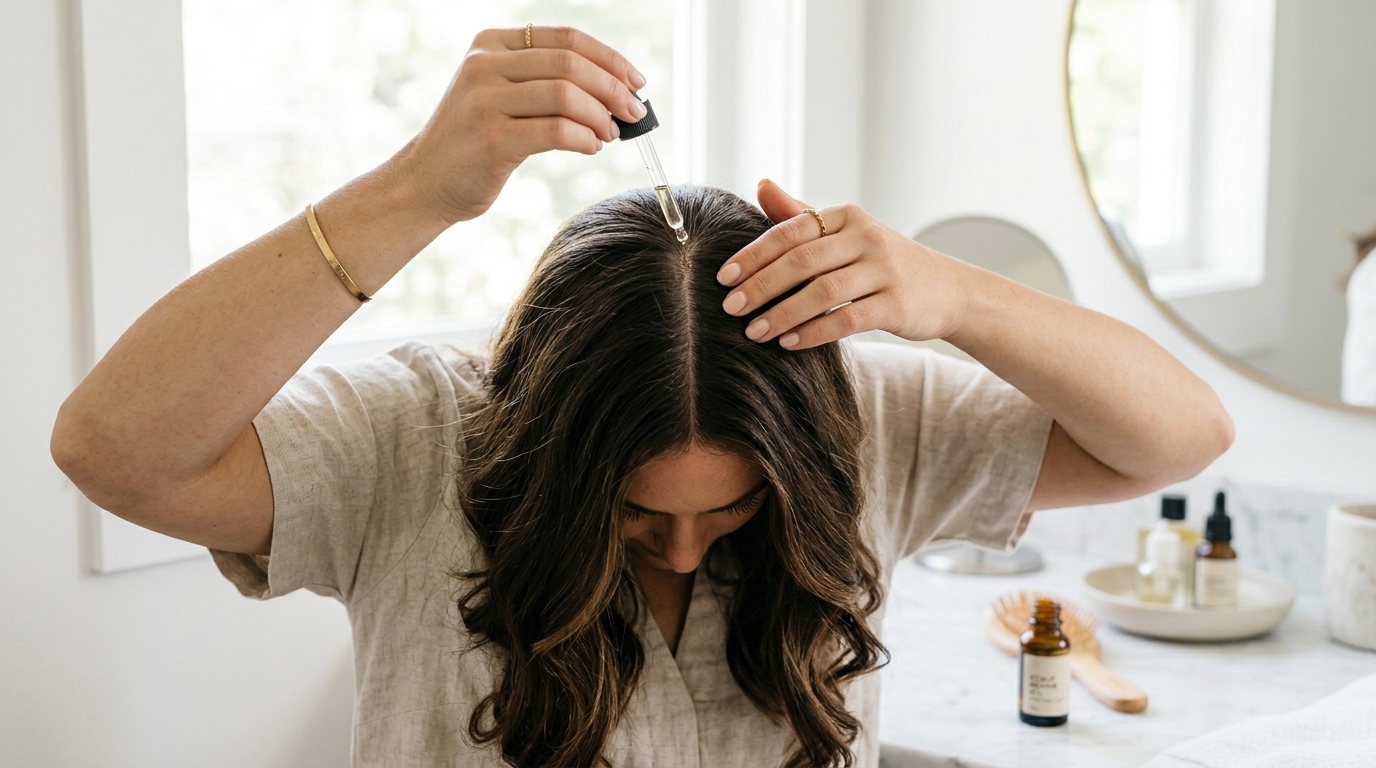
Because rosemary oil is a concentrated essential oil, it must be diluted before applying to the scalp. Mix 5 drops of rosemary essential oil into 1 tablespoon of a carrier oil such as jojoba, argan, or coconut oil. Massage into the scalp for 3 to 5 minutes to boost circulation, leave on for at least 30 minutes (or overnight), and shampoo out.
Use this treatment 2 to 3 times per week for the best results. Never apply pure rosemary essential oil directly to your scalp, as it can cause irritation.
Using Batana Oil Correctly
Batana oil is gentle enough to be used directly without dilution. Warm a small amount between your palms until it melts, then massage into your scalp and work down through the lengths and ends. You can use it as an overnight treatment, a pre-wash mask (leave on for 1 to 2 hours), or a small finishing oil on dry hair for shine.
Once or twice a week is plenty. Because it is so rich, using too much can leave hair feeling greasy.

Can You Use Both Oils Together?
Yes — and many haircare experts actually recommend it. Because the two oils target different concerns, they complement each other beautifully. Use rosemary oil to stimulate the scalp and encourage growth, and batana oil to nourish, strengthen, and protect the lengths of your hair.
A simple weekly routine might look like this: apply a diluted rosemary oil treatment to your scalp on Monday, and a batana oil mask through your lengths on Thursday. Or, mix them into a single overnight treatment by combining a few drops of rosemary oil into a tablespoon of melted batana oil. Either way, you are giving your hair the best of both worlds. A healthy scalp foundation is essential here, so for more on this, read our post on the scalp microbiome and why it matters for your hair.
The Verdict: Which One Should You Choose?
If you are still on the fence, here is the simplest way to decide. Choose rosemary oil if your top concern is hair growth, thinning, or scalp health. Choose batana oil if your top concern is damage, dryness, or breakage. And if you cannot decide, use both — strategically and consistently — for the best of both worlds.
Whichever you pick, the key is patience and consistency. Natural oils do not transform your hair overnight, but with regular use, they can deliver real, visible improvements. Your scalp will thank you, and your hair will show the proof.