
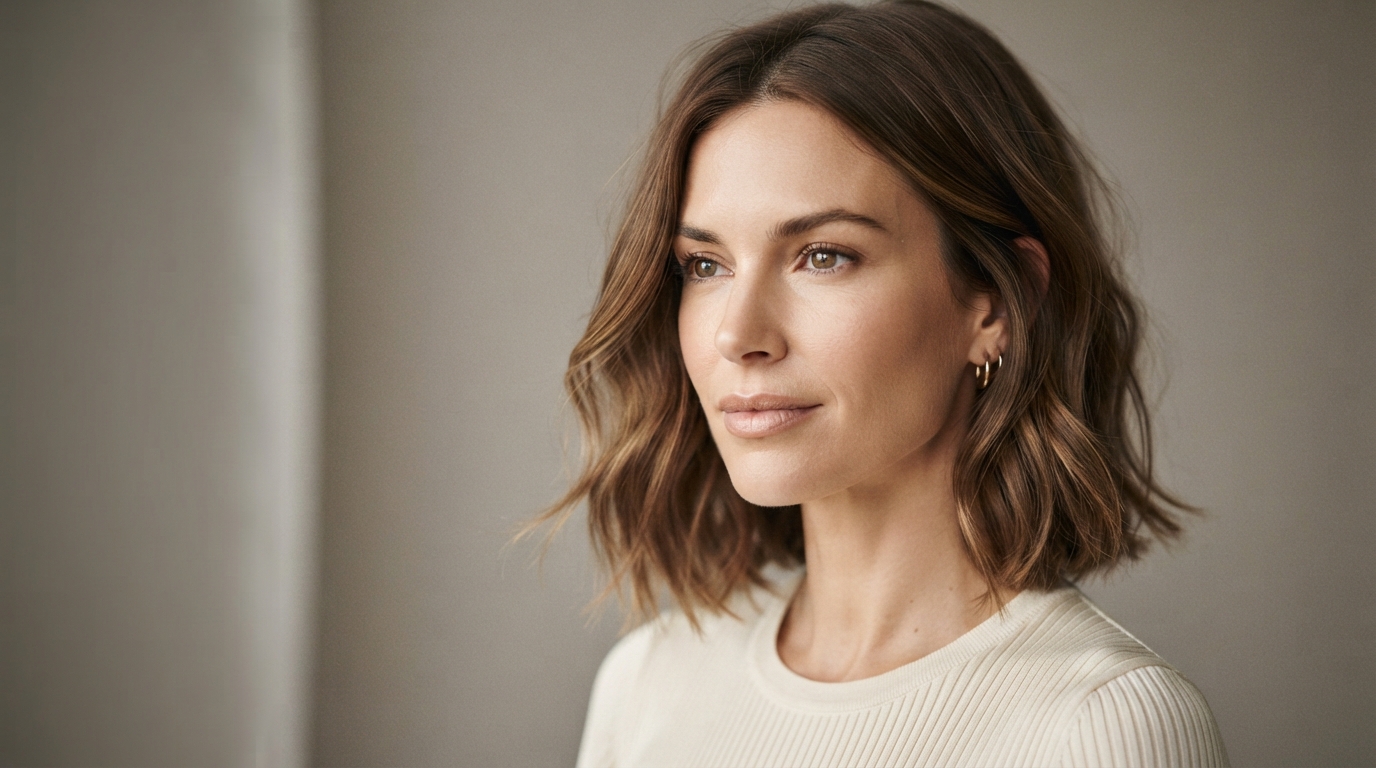
The Boyfriend Bob is a relaxed, softly structured take on a classic bob. It usually falls somewhere between the chin and collarbone, with enough length and texture to look natural instead of overly precise. The cut can be air-dried, lightly blow-dried, or dressed up with a little bend through the ends, making it a useful option for anyone who wants a shorter shape without a rigid finish.
Cosmopolitan describes the Boyfriend Bob as a relaxed version of a box or classic bob, with a length at the chin or below that allows for texture. The best version is always the one customized to your texture, density, and routine.
What Is a Boyfriend Bob?
A Boyfriend Bob has the clean shape of a bob with a more casual finish. It is typically longer and less strict than a micro bob, with softer edges and enough weight to create movement. The cut may have a blunt-looking perimeter, but the inside is often lightly textured so it does not sit like a heavy block.

Boyfriend Bob vs. Bixie and Lob
The Boyfriend Bob is distinct from other short and medium cuts on the site. A Bixie is shorter, more layered through the crown, and closer to a pixie-bob hybrid. A lob is generally longer, often sitting around the collarbone or below. The Boyfriend Bob lives between them, keeping a bob silhouette while allowing more natural movement than a sharply cut version.
If you are considering a shorter, more textured crop, compare it with our guide to the Bixie haircut. The Bixie suits readers who want a shorter nape and more visible layers. The Boyfriend Bob is a better starting point when you want a little more length around the jaw, neck, or shoulders.
Why the Shape Feels Current
Modern bobs are increasingly customized rather than one-size-fits-all. Who What Wear’s 2026 bob trend coverage highlights a stylist view that current bobs should reflect face shape, texture, maintenance preferences, and everyday styling habits. The Boyfriend Bob fits that direction because its length and finish can be adjusted without losing the relaxed identity of the cut.
Plan the Cut at Your Consultation
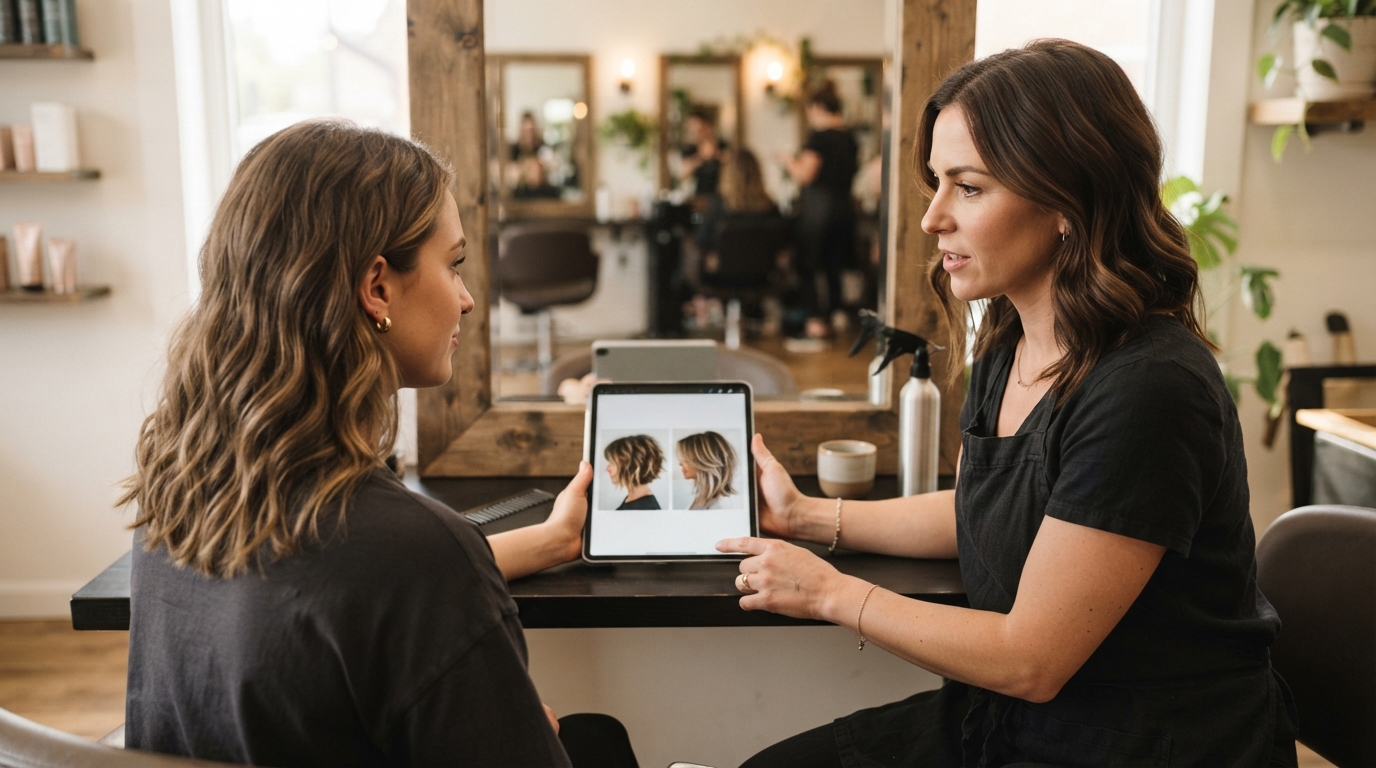
Bring reference photos that show the length, texture, and finish you want. A useful reference is not simply a picture of someone with a similar face. It shows the amount of volume, the position of the part, and whether the finish is straight, wavy, or air-dried. Tell your stylist how you normally wear your hair on a weekday, not only how you want it to look after a salon blowout.
Try this consultation brief: “I want a relaxed bob that sits between my chin and collarbone, with movement through the ends and enough length to tuck behind my ears. I do not want a rigid blunt line or heavy stacked layers. Please tailor the shape to my natural texture and show me the easiest way to style it at home.”
Choose a Length That Works for You
Jaw-length cuts make a stronger statement and can create a crisp silhouette. A length just below the chin gives more room for soft bends and tucking. A collarbone-adjacent version feels closer to a short lob and can be helpful if you prefer a gradual transition from longer hair. Your stylist can adjust the front length, back weight, and internal layers based on your hair density and neckline.
Discuss Natural Texture First
Fine hair may need a cleaner perimeter and restrained layering to avoid losing fullness. Thick hair may benefit from internal shaping that reduces bulk without making the ends wispy. Wavy, curly, and coily hair should be cut with the expected dry shape in mind. None of these rules are absolute, but discussing texture before cutting helps create a version that works beyond the first salon day.
Style a Boyfriend Bob at Home
Air-Dry for Soft Movement
On damp hair, work a small amount of lightweight cream, mousse, or texture spray through the mid-lengths and ends. Make your normal part, then tuck each side behind the ears for a few minutes while the shape begins to set. Release the hair and let it dry with minimal handling. This method works especially well for hair with a natural wave or slight bend.
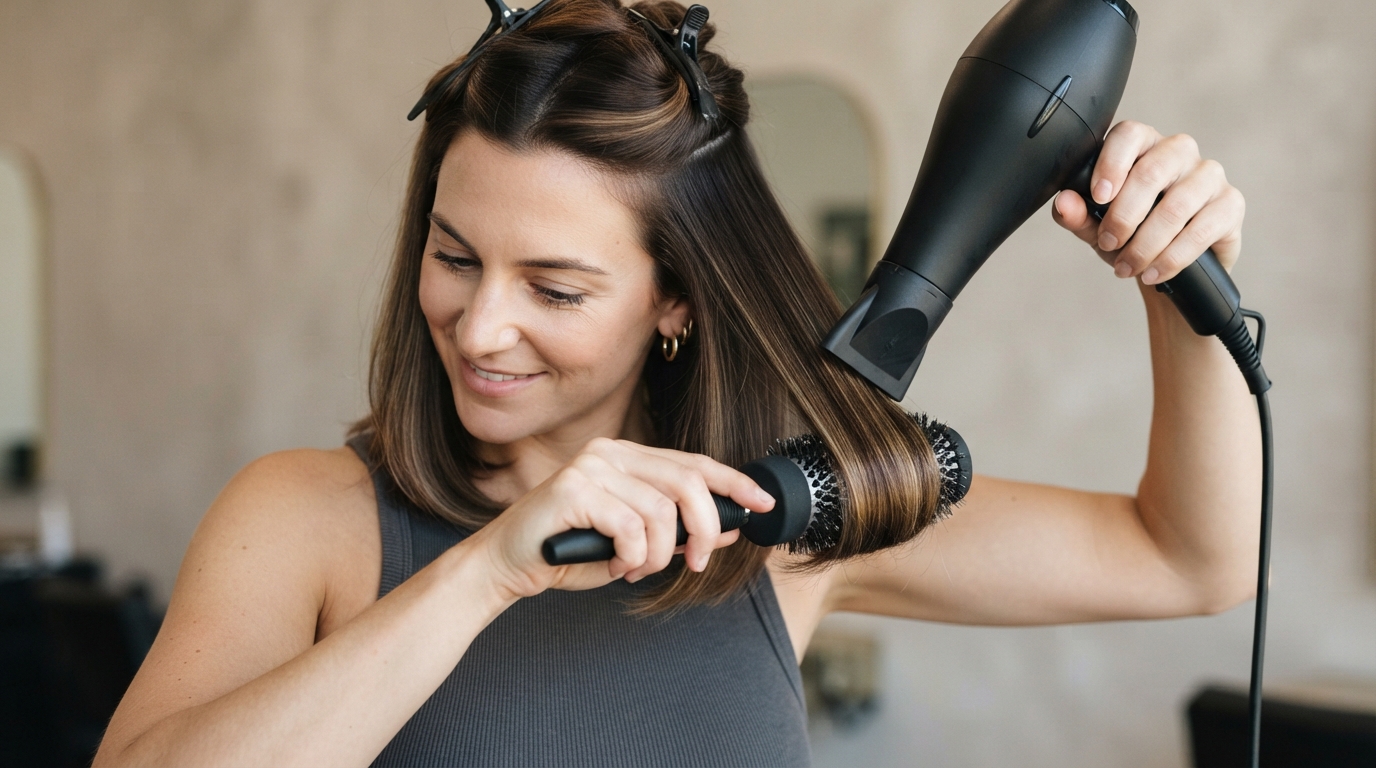
Blow-Dry for a Polished Finish
For more control, dry the roots in the direction you want the hair to sit. Then use a medium round brush to smooth the lengths and curve the ends gently inward or outward. Keep the finish soft rather than overly curled. If you enjoy an inward bend at the ends, use the face-framing method in our C-curl blowout tutorial as a finishing technique for your bob.
Use Low-Heat Texture When Needed
Not every styling day needs a hot tool. A loose braid, soft rollers, or a gentle overnight wrap can add movement through the lengths. For more ideas, see our heatless curls guide and adapt the method to a shorter length. With a Boyfriend Bob, you only need a subtle bend to create a lived-in finish.
Maintain the Shape Without Overcommitting
Ask your stylist for a maintenance plan based on your chosen length and texture. If you prefer a more polished line, you may want trims sooner. If you like an undone, soft outline, you may be comfortable allowing more time between appointments. The right interval is the one that keeps the haircut aligned with your routine and preferred finish.
Frequently Asked Questions
Is a Boyfriend Bob the same as a blunt bob?
No. A Boyfriend Bob can have a fairly clean perimeter, but it is defined by a softer, more relaxed finish. It usually has more flexibility and movement than a strict, sharply cut blunt bob.
Can a Boyfriend Bob work with curly hair?
Yes. The cut should be planned around the dry curl pattern, shrinkage, and desired amount of volume. A stylist who understands your texture can choose a length and layering approach that supports the shape.
Is a Boyfriend Bob really low maintenance?
It can be low effort to style, especially if the cut works with your natural texture. It is not maintenance-free. All bobs benefit from occasional trims and a routine that supports the desired shape.
The Boyfriend Bob offers a practical route into shorter hair. Its relaxed shape leaves room for air-drying, polished styling, and natural movement. Bring clear references to your consultation, choose a version that suits your real routine, and let the cut feel personal rather than prescribed.