
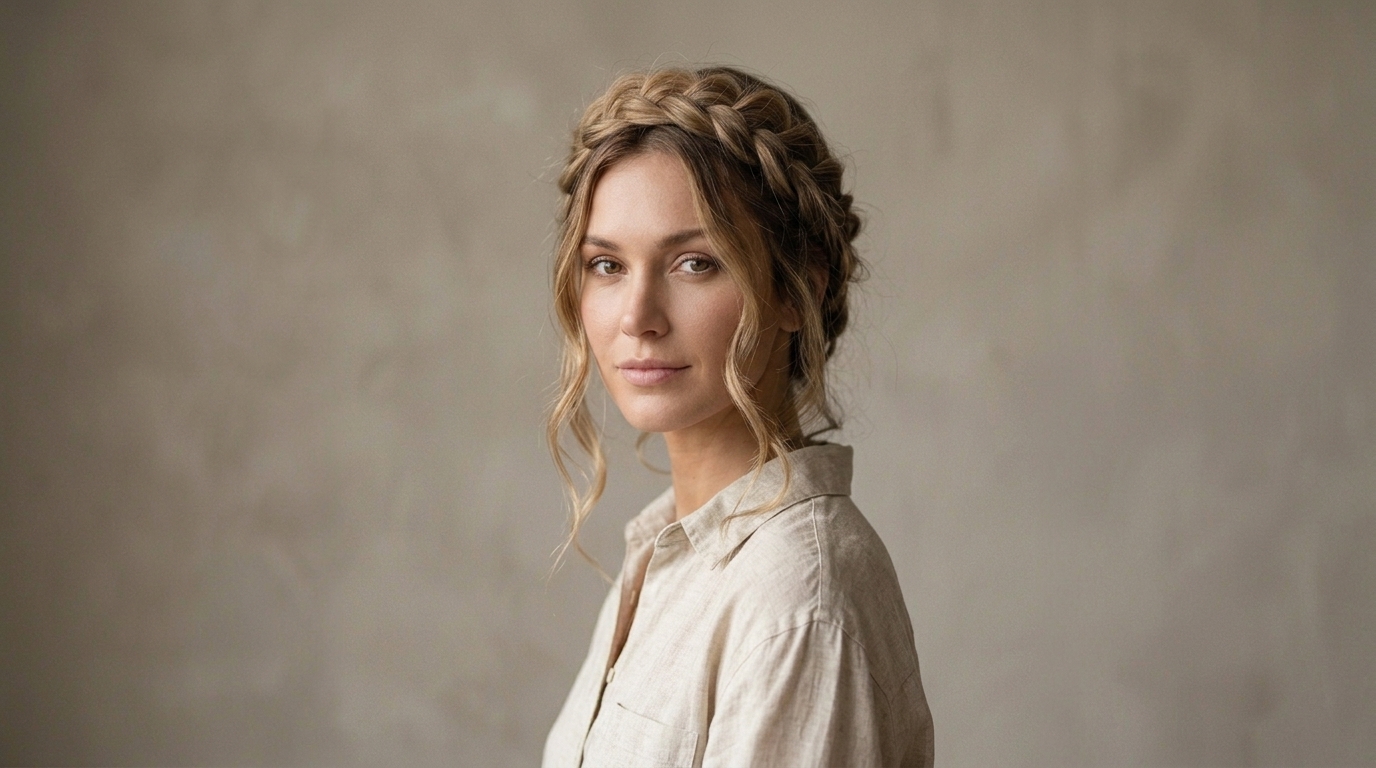
Airy crown braids bring a softer finish to a classic wrapped braid. Instead of a tightly controlled halo that sits flat against the scalp, this version has gentle volume, relaxed sections, and a few deliberate face-framing pieces. It can feel romantic for an event, but it is also practical enough for a dinner, a day out, or any time you want hair away from your face without a severe updo.
The key word is airy. Vogue’s 2026 hair trend coverage describes the modern crown braid as soft and full of movement, built from two large sections with pieces left around the face. That is why the finished style should look secure but not overworked. A little irregularity helps the braid feel current and personal.
What Makes a Crown Braid Feel Airy
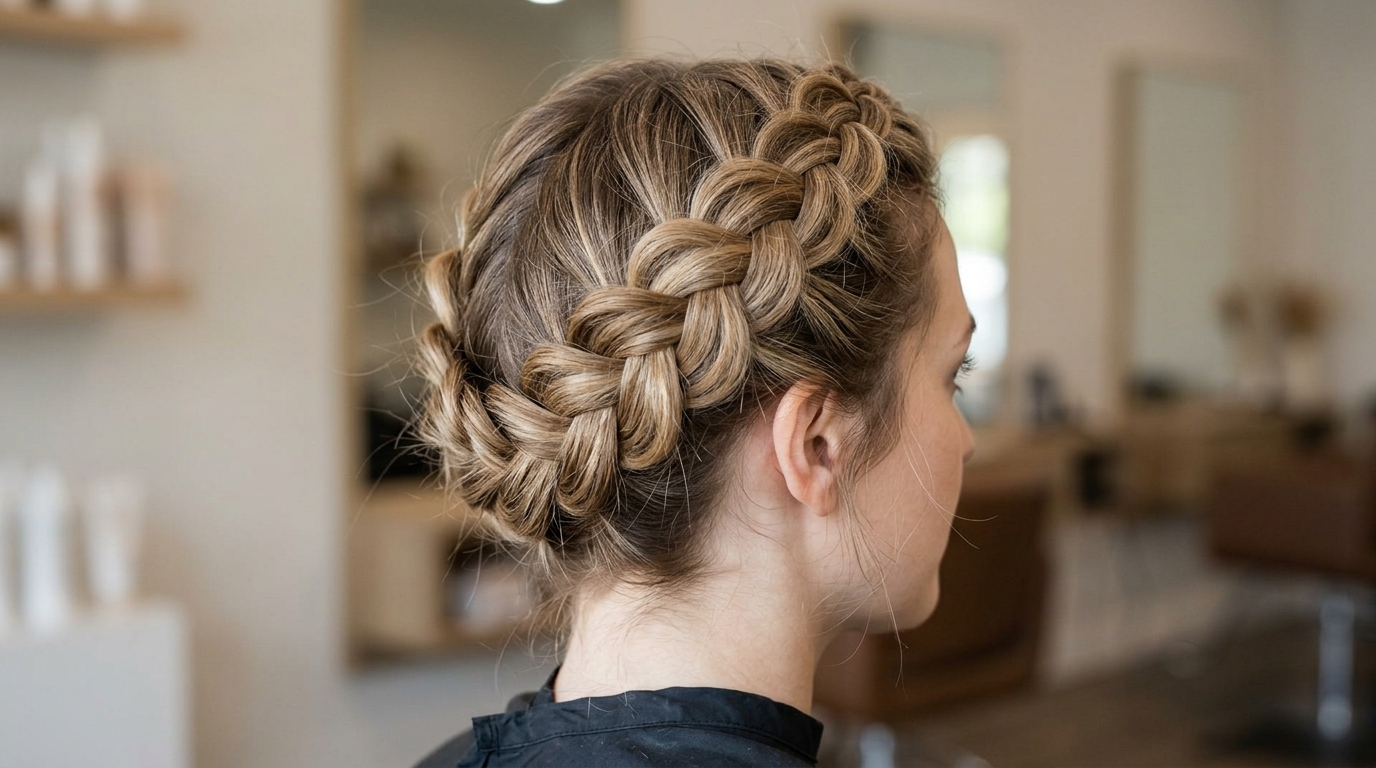
A traditional crown braid is a braid that wraps around the head like a halo. An airy version uses the same basic idea but changes the tension and finish. The braid is created with a light hand, then gently opened after it is secured. Softness through the crown and ends keeps the shape from looking too formal.
Prepare Hair for Grip and Movement
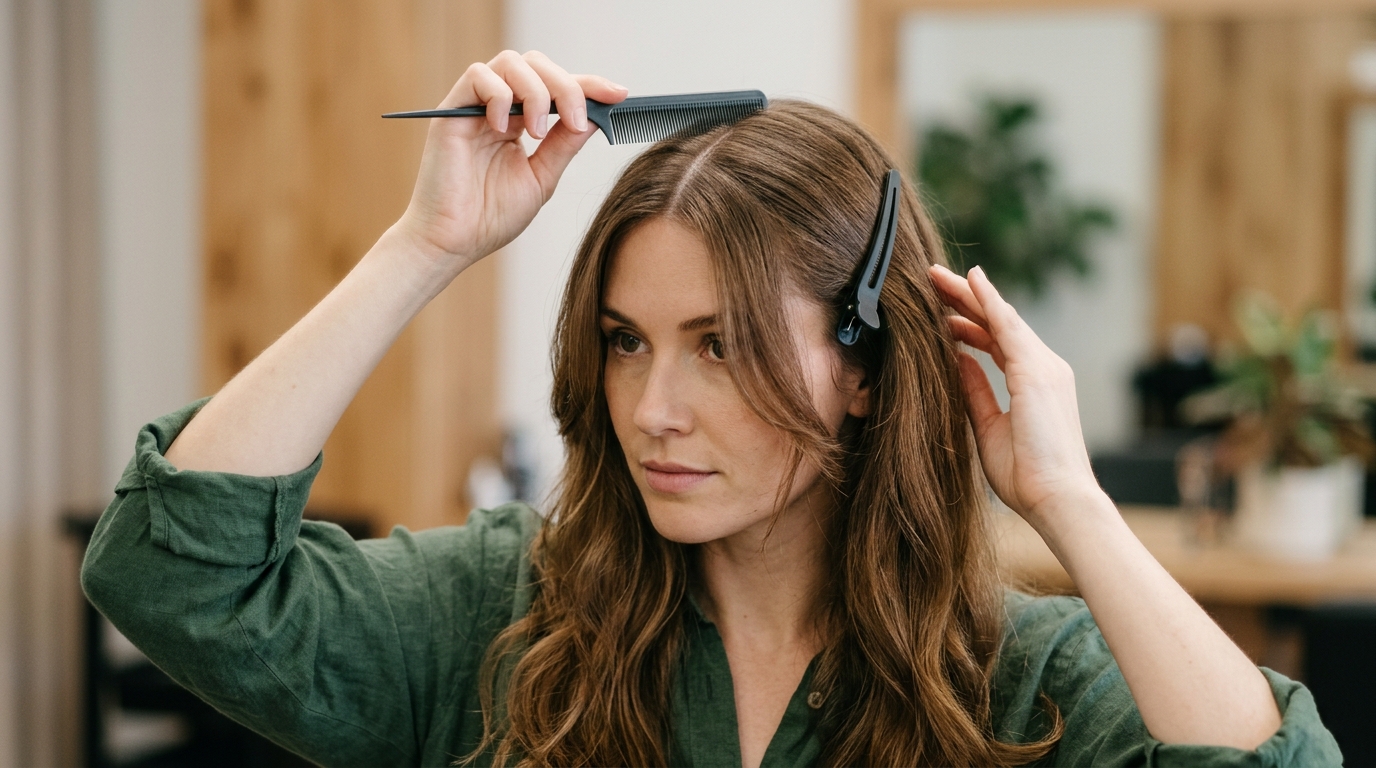
Begin by brushing through tangles from the ends upward. Then make a center or soft off-center part, depending on the look you prefer. Reserve two small sections around the hairline before you begin. These pieces will soften the finished style, so they should be intentional rather than loose strands that escaped the braid.
If you prefer to create a little wave before braiding, use the preparation ideas in our heatless curls guide. Gentle texture through the lengths can make the braid easier to hold and gives the remaining hair a relaxed finish.
How to Create Airy Crown Braids
Divide the Hair Into Two Large Sections
Part the hair from the forehead to the nape so you have one large section on each side. Clip one side out of the way. Start with the side that feels most comfortable, near the temple or just behind the ear. Working with two larger sections makes the finished crown feel soft and full rather than made of many small, tight braids.
Braid With Gentle, Even Tension
Create a loose Dutch or French braid, adding hair gradually as you move around the head. Keep the braid close enough to the hairline to form a crown, but do not pull it so hard that the scalp feels strained. Continue toward the nape, braid the remaining length normally, and secure the end with a small clear elastic. Repeat on the opposite side.
If you need a refresher on the basic technique, Byrdie’s crown braid tutorial demonstrates sectioning the crown, braiding across the head, and leaving face-framing pieces outside the braid. Use it as a foundation, then adapt the placement and looseness for your own hair length and texture.
Wrap and Pin the Braids
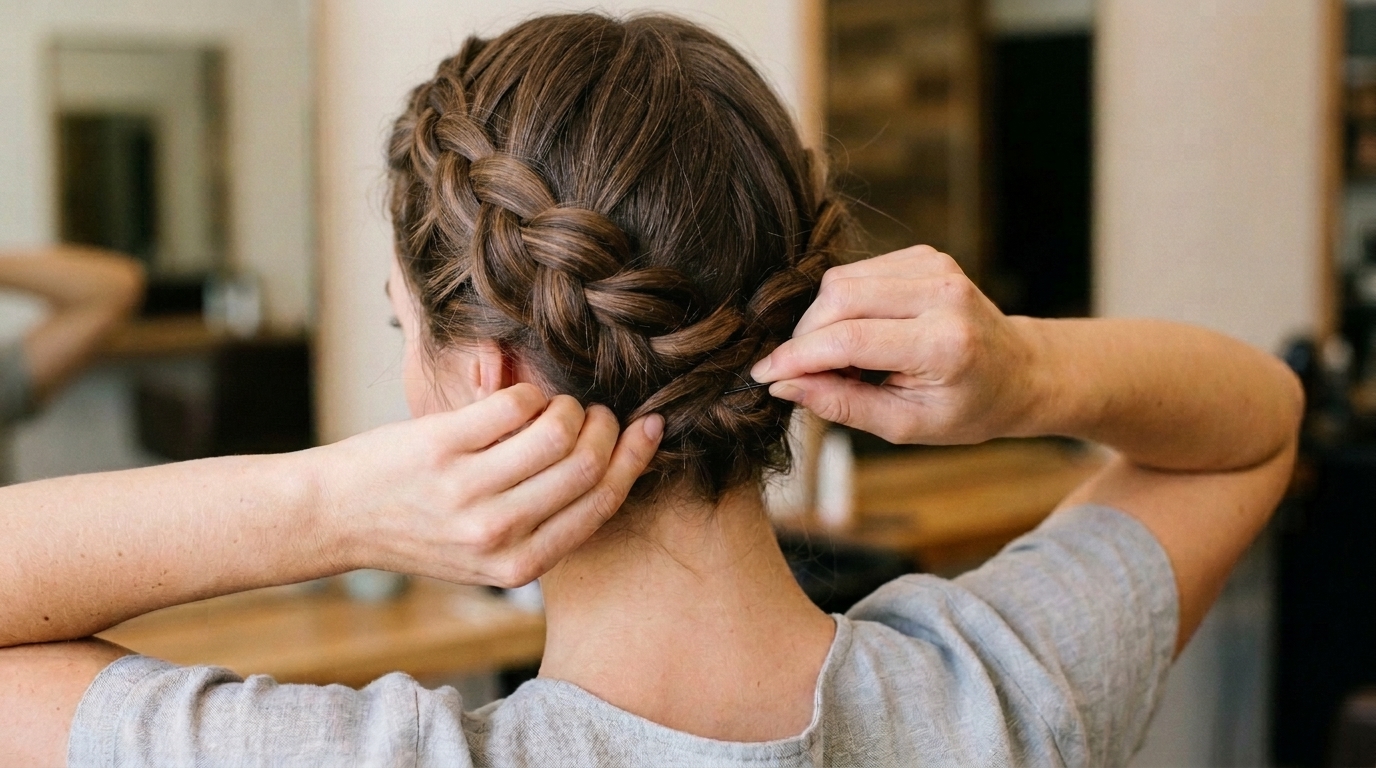
Bring the first braid across the back or top of the head, depending on where it naturally sits, and pin the end beneath the opposite braid. Repeat with the second braid, hiding the elastic and ends as you go. Slide bobby pins inward so they anchor the braid without being visible. Add pins only where the braid needs support instead of loading the whole style with pins.
Open the Outer Loops
Once both braids are secure, use your fingertips to gently pull at the outer edge of each loop. Start near the crown and work toward the ends, opening small sections a little at a time. Stop when the braid looks fuller and softer. If you pull too much too quickly, the braid can become uneven or loosen at the base.
Style the Front Pieces With Intention
The small pieces you left out should frame the face without competing with the braid. For a very soft finish, leave them in their natural texture. For a more polished event look, add a loose bend with a small tool or a round brush, then separate the hair with your fingers. Avoid creating perfect ringlets because they can make the style look overly formal.
If you wear a light fringe or longer pieces around the forehead, see our Cloud Bangs guide for ideas on keeping the front soft and separated. The same principle works here: use minimal product and follow the hair’s natural direction rather than forcing every strand into place.
Adapt the Style to Your Hair Type
Fine hair may benefit from a little texture spray before braiding and from pinching the outer loops only slightly. Thick hair may need stronger pins and a larger braid section so the crown does not become bulky. Wavy, curly, and coily textures can create beautiful volume in this style, but the braid should be shaped around the natural pattern rather than pulled smooth.
Shorter hair may work better as a half crown braid, with the lower lengths left down. Longer hair can wrap fully around the head or be joined at the nape. If you want a more polished alternative for a formal occasion, compare the balance of the braid with our guide to classic chignons and modern updos. Both styles can feel special, but the airy crown braid keeps more softness around the face.
Keep the Braid Comfortable and Lasting
A well-built crown braid should feel secure, not painful. If you notice pulling at the temples or hairline, loosen the braid and reset the pins before leaving the house. Use a flexible-hold spray only after you are happy with the shape. Spray lightly from a distance so the braid keeps its texture instead of becoming crunchy.
Frequently Asked Questions
Do airy crown braids work on freshly washed hair?
They can, but clean hair may need a small amount of lightweight texturizing product for grip. Use a little at a time so the braid remains soft and touchable.
Can I create this look on short hair?
Yes. A half crown braid is often the easiest choice for shorter lengths. It creates the same face-framing effect while leaving the lower section loose.
How can I keep a crown braid from looking too tight?
Use even but gentle tension while braiding, then widen the outer loops only after the braid is pinned. Leave small face-framing pieces out from the beginning rather than pulling them free at the end.
Airy crown braids are defined by secure construction and a relaxed finish. Start with grip, braid with gentle tension, pin discreetly, and open the braid slowly. The result is a versatile hairstyle that can feel as appropriate for an ordinary day as it does for a special occasion.