

Featured image here
Cloud bangs are the soft, wispy fringe that gives a haircut movement without the weight of a blunt bang. They are light through the center, gently longer toward the sides, and designed to blend into face-framing layers. The overall effect is airy and intentionally undone rather than sharply defined.
The look is a current evolution of grown-out curtain bangs. Harper’s BAZAAR describes cloud bangs as wispy, airy, see-through, and piecey, with a length around the middle of the eyelids. That definition is useful, but your own version should be shaped around your hair pattern, density, cowlicks, and styling routine. The goal is not to copy a celebrity photo exactly. It is to create a fringe that feels balanced with your cut and manageable in everyday life.
What Makes Cloud Bangs Different?
Cloud bangs sit between a traditional fringe and curtain bangs. A full fringe is usually denser and cut in a more obvious line across the forehead. Curtain bangs tend to part at the center or slightly off center, then sweep out toward the cheekbones. Cloud bangs borrow the soft separation of curtain bangs but use lighter, more irregular pieces across the forehead.

Plan the Cut Around Your Features
Face-shape guidance can help you explain what you like, but it is not a rulebook. The most useful factors are your hairline, growth patterns, density, texture, and the length of the surrounding layers. A skilled stylist can adjust the width, density, and longest point of the fringe so it works with those details.
Choose Length Before Density
Start by deciding where you want the shortest pieces to land. Eyelid-level or eyebrow-skimming pieces create a defined cloud-bang look. A longer version that reaches the cheekbones can feel more relaxed and is often easier to blend out later. Ask for a soft transition into the layers rather than a disconnected line.
Consider Texture and Cowlicks
Straight hair may need a little styling direction to keep the fringe open and separated. Wavy hair can create the airy effect naturally, but the fringe should be cut with its shrinkage in mind. Curly and coily hair can wear a soft fringe too, though the finished shape, dry length, and daily routine may look different from a straight-hair reference image. Cowlicks are not a reason to avoid bangs, but they should be discussed before cutting so the stylist can work with the direction of growth.
What to Ask for at Your Appointment
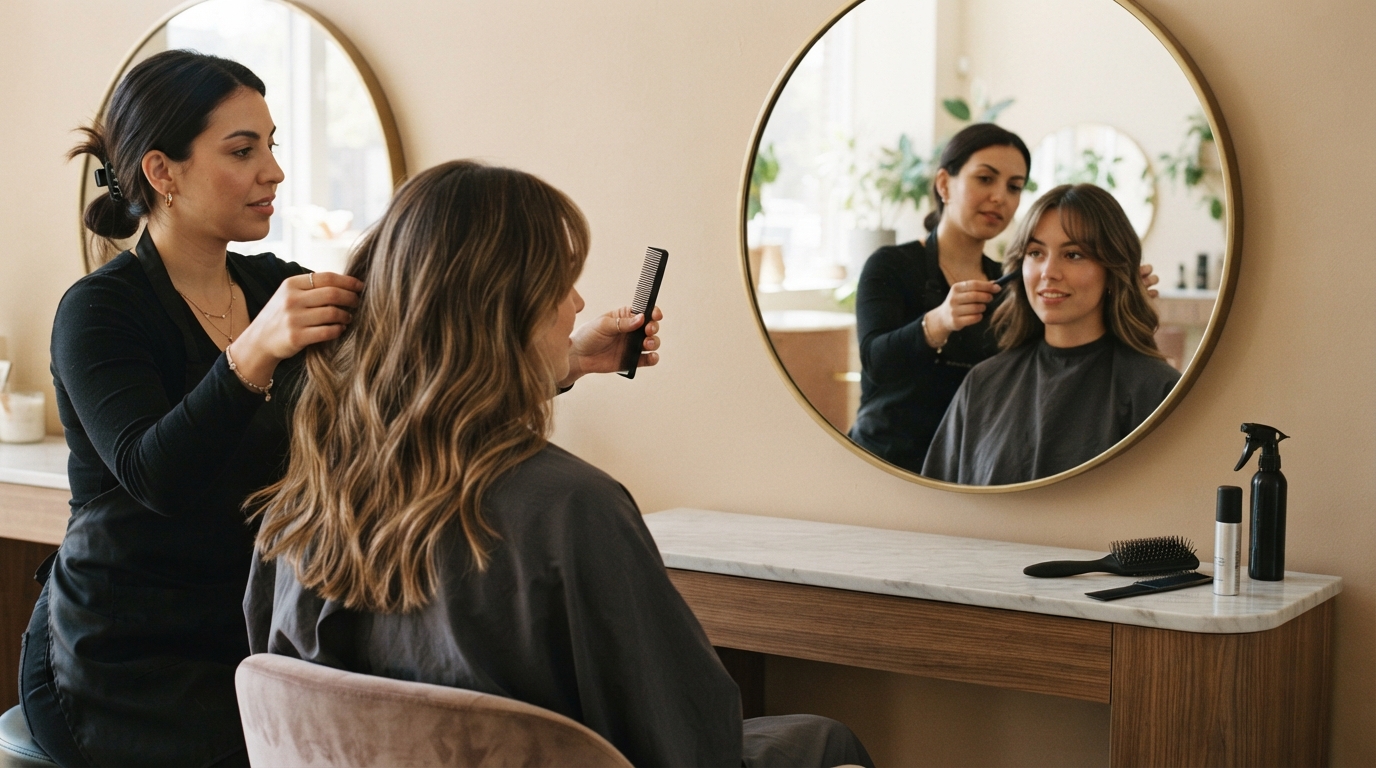
Bring two or three reference images that show the amount of softness and texture you want. Include a photo of your own hair when it is styled as usual. This gives your stylist a more useful starting point than a picture of someone with a very different density or curl pattern.
Try this consultation language: “I want light, airy, see-through bangs that part softly and blend into face-framing layers. I do not want a heavy blunt fringe. Please keep enough length at the sides so the shape can grow out gradually.”
For broader context, ELLE’s curtain-bangs guide notes that texture and thickness affect the shape and styling of a face-framing fringe. It is also helpful to tell your stylist how often you heat-style, whether you air-dry, and how often you are comfortable booking a trim.
Cloud Bangs and Short Cuts
A soft fringe can update a bob, shag, or mid-length cut. On a very short style, the proportion needs extra care because the fringe becomes a major part of the silhouette. If you are considering a shorter crop, compare the effect with our guide to the Bixie haircut. The Bixie uses shorter, textured layers, while cloud bangs focus on a lighter frame around the forehead and eyes.
Style Cloud Bangs Without Overworking Them
Cloud bangs look best when they stay light. Heavy oils, thick waxes, and too much hairspray can cause the pieces to separate in the wrong way or collapse against the forehead. Begin with clean or lightly refreshed hair, then use only the smallest amount of styling product your texture needs.
Round-Brush Method for Straight Hair
Start with bangs that are damp, not soaking wet. Divide them into a center and two side sections. Dry the center forward first, then guide each side diagonally away from the face with a small round brush. Finish with cool air before removing the brush. This sets a soft curve and prevents the fringe from looking too curled.
Air-Dry or Diffuse for Texture
If your hair is wavy, curly, or coily, use fingers to encourage the natural direction of the fringe. Let it air-dry or diffuse with minimal handling. Once dry, separate only the pieces that need definition. If you prefer to reduce heat elsewhere in your routine, our heatless curls guide offers ideas for creating texture through the lengths while keeping your fringe routine simple.

Maintain and Grow Out the Fringe
Cloud bangs are light, but they are not maintenance-free. Because they sit in front of the face, small changes in length can feel noticeable. Ask your stylist when they recommend a trim, then adjust that schedule based on how quickly your hair grows and how you prefer the fringe to sit. A short trim appointment can preserve the shape without changing the rest of your haircut.
To grow out cloud bangs, shift the part gradually off center, use a light clip when needed, and blend the longest pieces into side layers. Avoid cutting them yourself after one awkward day. A small styling adjustment is often enough to get through the in-between stage. For a polished finish on the rest of your hair, use the gentle face-framing approach in our C-curl blowout tutorial to turn the ends inward.
Frequently Asked Questions
Are cloud bangs the same as curtain bangs?
No. Both are soft and face-framing, but cloud bangs are usually lighter and more see-through through the center. Curtain bangs often have a more defined center part and longer sweep at each side.
Can curly hair wear cloud bangs?
Yes. The shape should be customized for the curl pattern and dry length. Ask for a consultation that considers shrinkage, density, and how you prefer to style your curls day to day.
Are cloud bangs easy to grow out?
The longer side pieces can make the transition gentler than a heavy blunt fringe, but every fringe still needs patience as it grows. Regular shaping and a gradual part change can help it blend into face-framing layers.
Cloud bangs are a flexible way to add softness and movement to a haircut. Keep the consultation specific, the styling light, and the maintenance realistic. With a shape that respects your natural texture and routine, the fringe can feel current without asking you to change your whole look.