
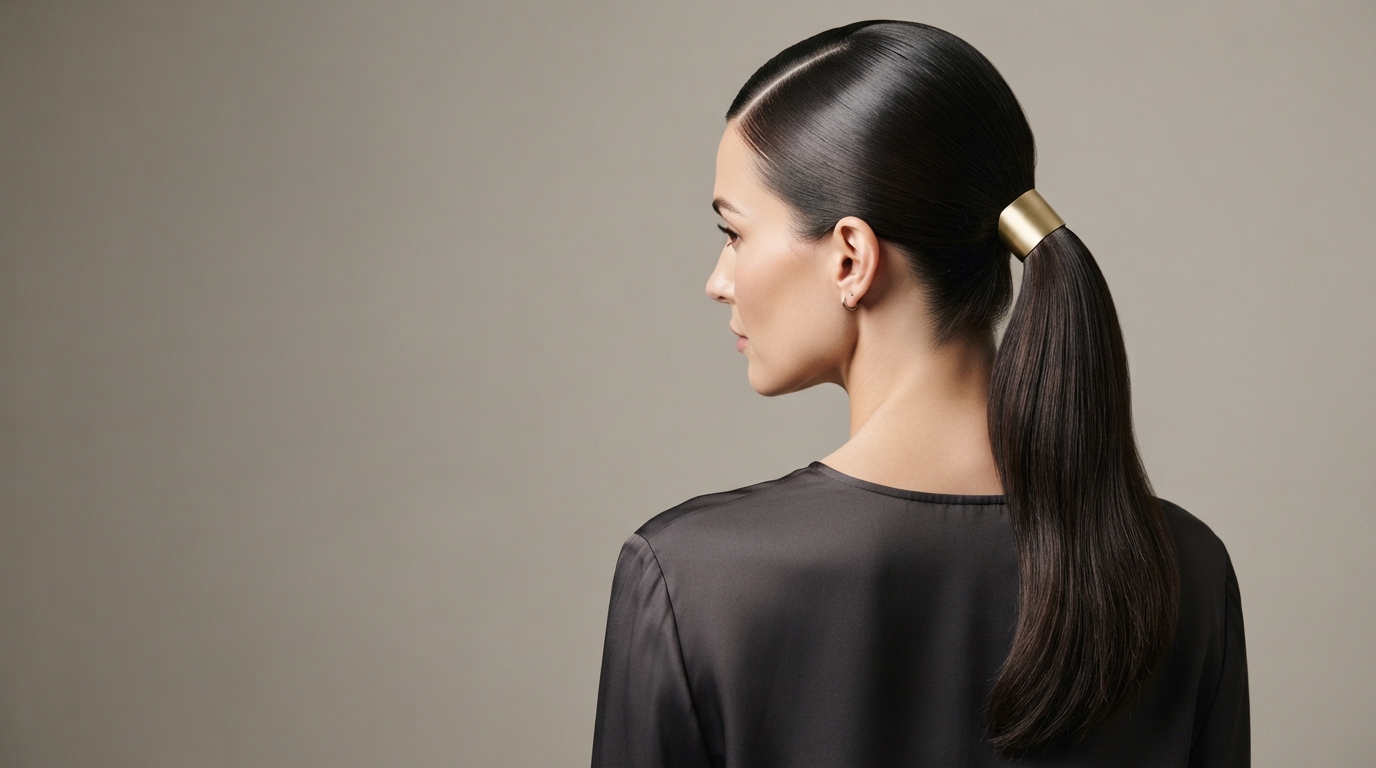
Featured image here
A sculpted ponytail is the polished answer to days when you want your hair to look intentional without committing to a full updo. The look combines a smooth, lifted base with a clean length and one refined detail, such as a minimalist cuff, ribbon, or wrapped section of hair. It works for a work event, dinner, wedding guest look, or an elevated everyday style.
The style is also having a moment. Harper’s BAZAAR included the sculpted ponytail among its 2026 hair trends, noting the appeal of a sleek lifted base and one intentional finishing detail. The goal, however, is not to pull hair as tightly as possible. A successful sculpted ponytail looks refined while still feeling comfortable. This tutorial focuses on even sectioning, a secure base, and a finish that does not need constant readjustment.
What Makes a Ponytail Look Sculpted?
A standard ponytail simply gathers the hair. A sculpted ponytail has deliberate structure. The crown is smooth but not flat, the placement suits the head shape, and the length looks finished rather than accidental. Choose placement before you start. A high ponytail creates a lifted silhouette. A mid-height ponytail feels balanced and works well with face-framing layers. A low ponytail is understated and suits a clean center or side part.
You do not need pin-straight hair to create this look. Straight, wavy, curly, and coily textures can all wear a sculpted ponytail. Smooth the roots and let the length keep natural movement if that suits your style. For a more reflective finish, start with the preparation techniques in our glass hair guide.
Prepare Hair for a Smooth, Comfortable Base
Begin with dry, detangled hair. If you wash first, condition the lengths and work through tangles from the ends upward. Avoid rough towel rubbing, which can make hair harder to smooth. If you use heat, apply heat protectant and use a temperature appropriate for your hair. The American Academy of Dermatology’s healthy-hair guidance also recommends gentle detangling and avoiding excessive heat.
Lightly smooth the roots with a brush or your hands. Use a small amount of styling cream, gel, or mousse only if you need control. Add it gradually, because too much product can make the crown stiff or leave the ponytail heavy.
Choose Your Part and Placement
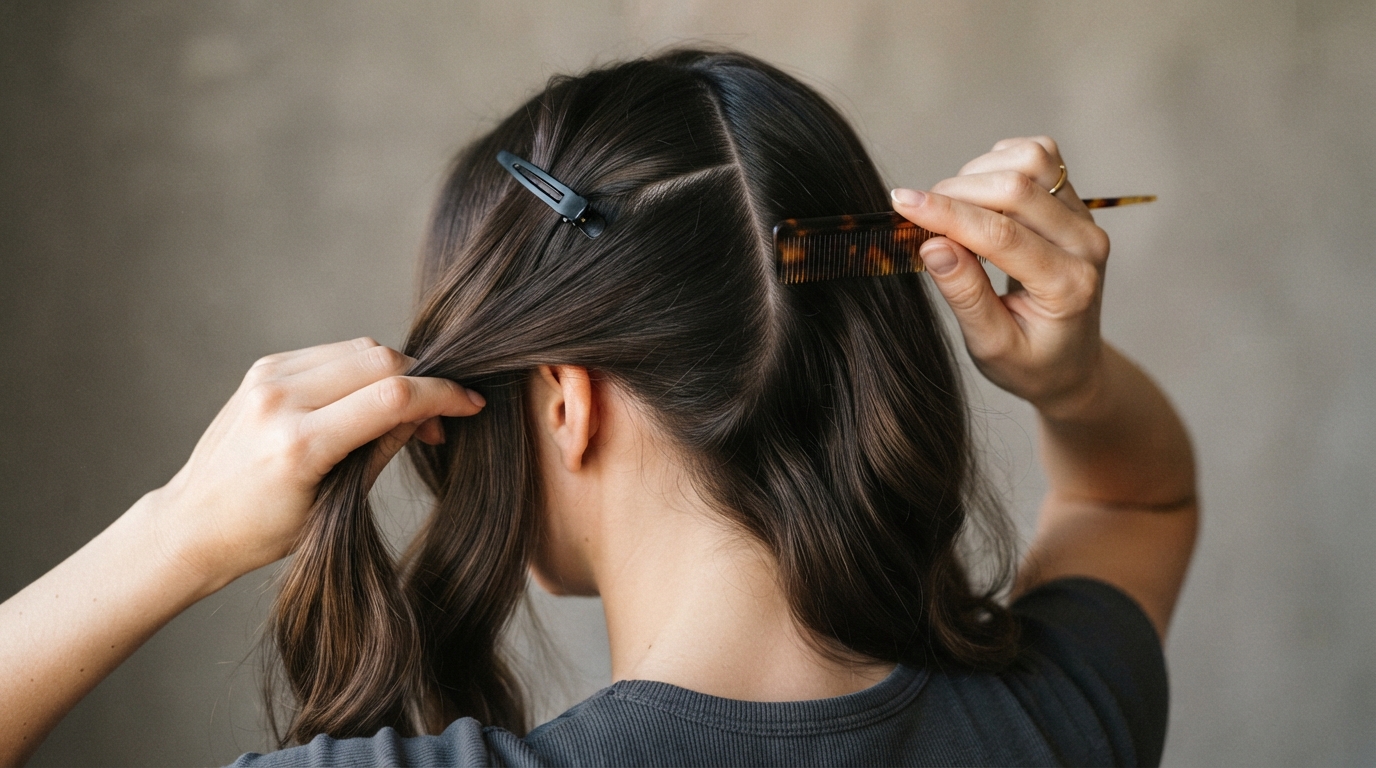
Make your part before gathering the hair. A center part gives a clean, symmetrical finish, while a side part creates softer movement. Gather at a point that feels secure without pulling your head backward. If you feel strain at the hairline, lower the placement slightly and redistribute the hair before securing it.
How to Create a Sculpted Ponytail
1. Section and smooth in stages
Work from the lower back section upward rather than collecting everything at once. Gather the bottom half first, then bring in the sides and crown. Hold the hair with one hand while the other smooths each section toward the chosen point. This gives you control and reduces the need to brush repeatedly over the same area.
2. Secure the base without overtightening
Use a snag-free elastic that can hold your hair density without several tight wraps. Secure the ponytail, then check the tension. You should be able to turn your head comfortably. If the base feels painful, numb, or causes a headache, remove it and start again with lower tension. A sculpted finish comes from clean sectioning and thoughtful placement, not discomfort.
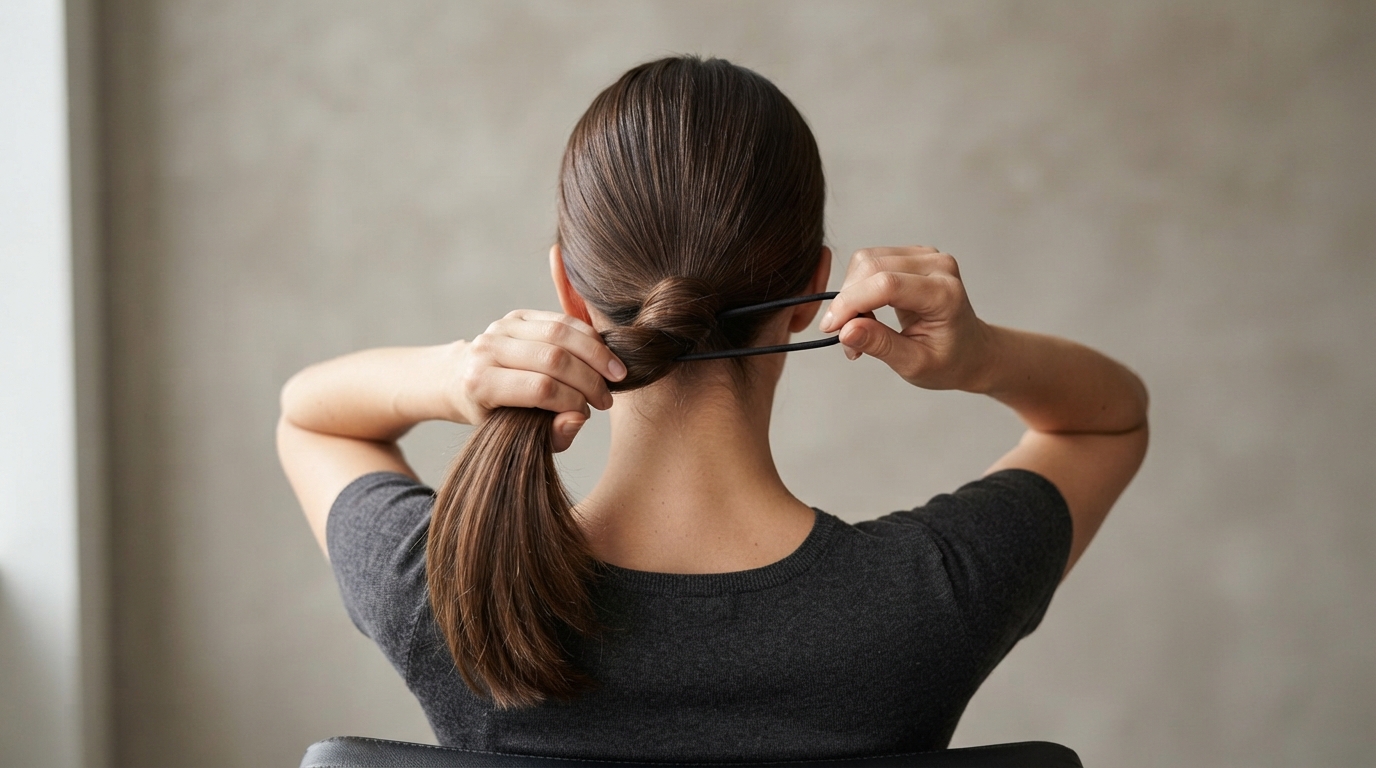
For extra stability, slide a bobby pin beneath the elastic from each side with the wavy side facing the scalp. Cross the pins beneath the base instead of stacking them on top. This anchors the elastic while keeping the outside of the style neat.
3. Shape the length
Choose a finish that suits your hair. Comb the length straight for a clean line, add a soft bend through the ends, or keep your natural curl pattern visible. Use a small amount of serum through the mid-lengths and ends, keeping it away from the roots. If you prefer a gentle inward curve, borrow the end-shaping technique from our C-curl blowout tutorial and use it only on the lower few inches.
4. Add one intentional detail
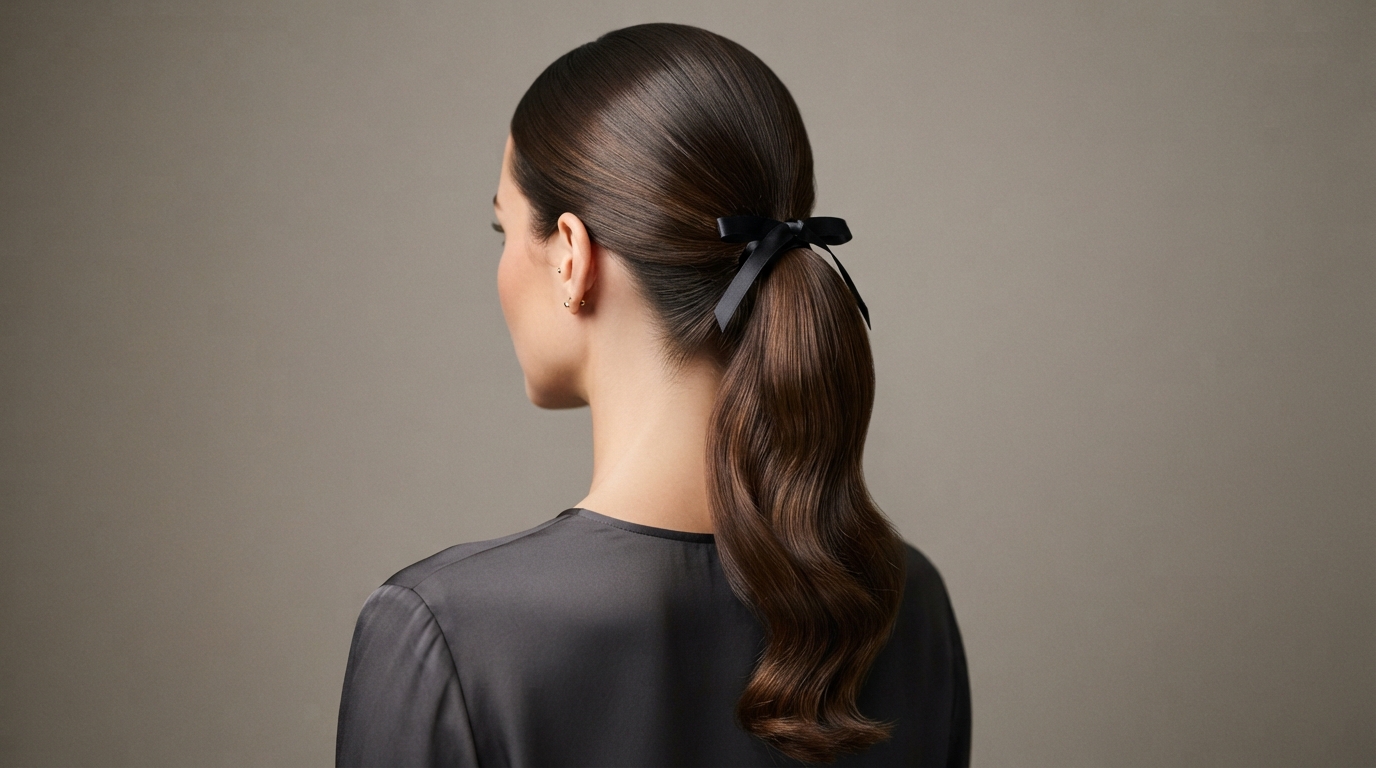
One detail is enough. Wrap a small section of hair around the elastic and pin the end beneath the base, add a slim cuff, or tie a narrow ribbon around the finished ponytail. Choose an accessory that is smooth and light enough that it does not pull on the base. The aim is considered, not crowded.
Adapt the Style to Your Hair Type
Fine hair may benefit from a texturizing product through the lengths before gathering. Thick hair often works best with sectioning and a strong but gentle elastic. Wavy, curly, and coily hair can keep its texture through the ponytail while the crown remains defined. Work with the tool that lets you control the style without excessive pulling.
Short layers may fall out around the nape or temples. Instead of repeatedly tightening the elastic, use a few discreet pins or leave soft face-framing pieces out on purpose. For a special event, explore our guide to classic chignons and modern updos for ideas that build on the same polished foundation.
Make the Style Last and Remove It Gently
Set the finished look with a light, flexible-hold spray if needed. Carry a small comb for flyaways rather than redoing the base during the day. At the end of the day, remove accessories and pins first. Unwind the elastic instead of pulling it straight through the hair, then loosen the base with your fingers and detangle the lengths from the ends upward.
Frequently Asked Questions
Can I create a sculpted ponytail without heat?
Yes. Start with dry hair, smooth the base with a brush or your hands, and keep your natural texture through the length. Careful sectioning and a lightweight styling product can create a polished result without heat tools.
How tight should a sculpted ponytail be?
It should feel secure, not painful. If you notice pulling, a headache, numbness, or discomfort around the hairline, loosen it. A comfortable base is more likely to look natural and stay wearable throughout the day.
What accessory works best?
Choose one lightweight detail, such as a narrow ribbon, small cuff, or a hair wrap that conceals the elastic. The accessory should complement the clean shape rather than compete with it.
A sculpted ponytail proves that a simple hairstyle can still make an impact. Focus on a comfortable base, an intentional silhouette, and one refined finishing detail. With those elements in place, the style can feel current, versatile, and entirely your own.